 When your uncle is one of Australia’s leading jazz Pianists and he announces that he is giving a 90th Birthday Concert (and you have never heard him play live), you have to put aside the excuse that going there and back takes 45 hours flying time, crosses 11 time zones, covers a distance of at least 22,208 miles (35,532 km) and (for the geographers) is 81° South and 147° East of where we live and that we are are very busy at the moment with too many other things and that a trip to Australia is not in the diary!
So we decide to hop on a plane to go to a concert on the other side of the planet (well almost the other side) and come back only a few days later. We are also going to fit in a few days in a campervan, visiting the parts of Tasmania which we did not see the last time we were both here (some 8 years ago).
As an aside, there is this very useful(!?!) software tool which lets you find out where (with respect to anywhere on the planet) the other side actually is. For us, the other side is in the middle of the ocean, very close to the International Date Line and some way south east of the southern island of New Zealand.

To be somewhere where the other side of the earth actually was Hobart, you would have to be in the middle of the Atlantic Ocean.
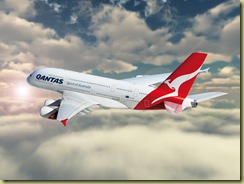
Therefore a cold damp Saturday afternoon in mid November sees us heading off to Heathrow again (my fourth visit to Australia) to catch the largest passenger airplane currently flying (the Airbus A380) for a flight which (in economy), is more likely to have to be endured rather
than enjoyed. Luckily we have been able to cash in all of our air miles for these tickets because this is a quiet time of the year for flights to Australia and therefore the cost is not exorbitant. Previously we have been unable to spend them on long distance flights because we have been travelling at peak times and there were no air miles seats available (a common complaint of the avid air mile collector) unless you booked up a very long time in advance.
To our relief, this flight is actually operating. About three weeks ago, Qantas suddenly announced the grounding of all planes due to an industrial dispute. There then followed an interesting few days watching from afar, reaction to the dispute and the fairly swift emergence of an interim outcome. We were actually listening to ABC News Australia live through web streaming when news of the imposed interim solution was announced – the internet certainly is powerful.
Although we are only going to be in Australia for 8 days, we seem to have almost as much luggage as when we go away for a few months. It seems that about 2/3rds of our luggage comprises things that make life easy when you are living in a campervan and the amount is unrelated to the length of the holiday. The amount of clothes we take also is fairly unrelated to holiday duration because when on the road, we use washing machines whenever they present themselves. Everything gets checked off on the list and when possible, split between two bags so that if one bag gets lost or delayed, we do not loose everything.
The drive to Heathrow was going very well until we got to within 1 mile and a couple of minutes from the car park and we found that the police had closed the road for some unknown reason. Our satnav provided a 10 mile re-route and this took around 40 minutes of tense driving through heavy traffic and areas of London we did not know existed. To say that we felt some relief when we saw the car park ahead and even more relief when we got to the airport terminal an hour later than planned about 30 minutes before check-in closed is an understatement.
Our flight takes off reasonably on time and heads out across Europe for Singapore by traversing (as the Pilot puts it) “Europe, some of the Stans, India and down Malaysia”.
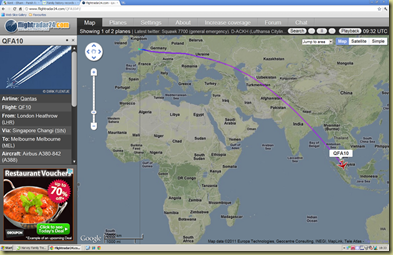
This route is quite close to the Great Circle Route which is the shortest line between two points on the globe.

| From | To | Distance | Time | From | To | Distance | Time |
| LHR | SIN | 6765 mi | 12:55 | HBA | SYD | 645mi | 1:45 |
| SIN | MEL | 3743 mi | 7:35 | SYD | SIN | 3907mi | 7:55 |
| MEL | HBA | 383 mi | 1:15 | SIN | LHR | 6765mi | 14:21 |
| | 10891mi | 21:20 | | | 11317mi | 24:01 |
Two meals, eight time zones and 2½ films later we reach our first transit which is at Singapore Changi and this has to be one of the best transit airports in the world. If flying to or from the far east, it certainly beats Hong Kong (a bit sterile) and the new Bangkok (horrid). Singapore seems to have set its stall out as being a good place to transit.
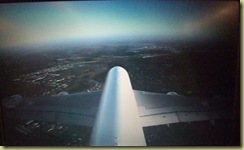
The A380 has a tail mounted camera so you can get a high pilot’s eye view of everything in front of the plane
Unfortunately our plane circled Singapore for some time waiting to land and as a consequence we did not have enough time whilst the plane was refuelled and reprovisioned to shower in the Rainforest Lounge which is bargain at only $8SD (about £4) – perhaps we may be able to on the way back (post script – we did).
Then it is back on the plane – two more films, more food, a little sleep, cross the equator and on towards Australia crossing some of the wildest parts we drove through in 2009.

and at Melbourne the following morning the tail camera shows:
 |
| Banking over Melbourne |
 |
| Going over the city |
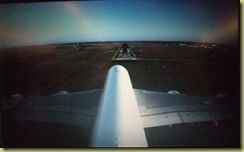 |
| About to land |
The transit process from International to Domestic at Melbourne has a fairly bad reputation for queues, stress and effort. For the international traveller, after Immigration (aka Border Protection) there then follows the Quarantine Inspection Service.
We are used to both of these but they take time and when a number of large big jets arrive close together, the system gets strained. We have just over two hours to get into Australia and also check-in for our next (domestic) flight to Hobart. In the event, immigration is quick because they allow us to use the Australian Citizens channel, but our bags take for ever to arrive giving rise to thoughts that they had been left behind – relief again when they appear and the Quarantine Dog takes no interest in us when we are sniffed.
All international flights arrive at T2 and Qantas Domestic goes from T1 next door so having navigated the above, you have to go land side, then walk to the next terminal with your bags, queue up again to check-in for your next flight, go through security etc etc. This process is made more tedious by the fact that Qantas have introduced some automatic bag check-in machines which do not seem to work – they would only take one of our bags and human intervention was required to solve the problem. Many other passengers were having problems and we saw at least two miss their flights because they could not get their luggage accepted by the machine.
Hobart Airport is undergoing expansion / renovation but it
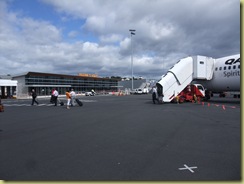
is a welcome sight and our car (booked through Quidco and Holiday Autos) is ready and waiting with only 1500kms on the clock and our SatNav takes us straight to our hotel.
And so, some 31½ hours after we closed our front door in England, we open our front door (for the next three days) in Hobart at the Grande-Vue Hotel which is more of a B&B than a hotel but is very comfortable.

Our “getting over Jet Lag Calculator” forbids us from immediately going to bed. We are instructed to get out into the light and we are not allowed to go to bed until 1530 and we have to get up again at 1800 and go back into the light (with different times specified for the following day). The routine (assisted by Melatonin) has worked in the past so we are prepared to obey the rules (once we did not rigidly obey the rules and we suffered as a consequence).
So it is out for a walk into Hobart, heading for the Salamanca Market area for a spot of lunch when the only thing our bodies are doing is to complain that they think it is 1 a.m. in the morning and they really do not want to eat and would rather be in bed!


