Thursday, 24 September 2015

The last 17 hours and 35 minutes

The active part of our second day was not really this long because the first 10 hours of it were spent in bed and having breakfast ! However once out of bed and onto the streets, the objective was walk to the Gothenburg Museum of Art - aka Goteborgs Konstmuseum.

Art Gallery

There is a fountain of Neptune / Poseidon  

Neptune

immediately outside, in our opinion, a nice fountain but not looking much like him. Erected in 1931, it caused some comment because he is naked and supposedly well endowed.

This turned out to be one of the best value places we visited and also one of the most enjoyable - the entry fee of €40

Tickets

giving entrance not only to the Art Gallery but also to four other venues: Rohsska Museum (Design, Fashion and Applied Arts) ; Stadsmuseum (City Museum) ; Naturhistoriska Museum (Natural History Museum) ; and the Sjofartsmuseet Akvariet (Maritime Museum and Aquarium) not that we had the time to visit them. If we have a wish to come back to Gothenburg, then our ticket is valid until the end of the year.

Gallery to ourselves

What made our visit particularly enjoyable was that we had much of the Museum to ourselves. We went from Gallery to gallery and we were then only people there - just us and a room full of Picasso’s

Frits Thaulow Rock

or a room full of the best of Scandinavian Art such as Rock by Frits Thaulow 1847-1906, the rock was just like those we have sat upon when out on our travels.

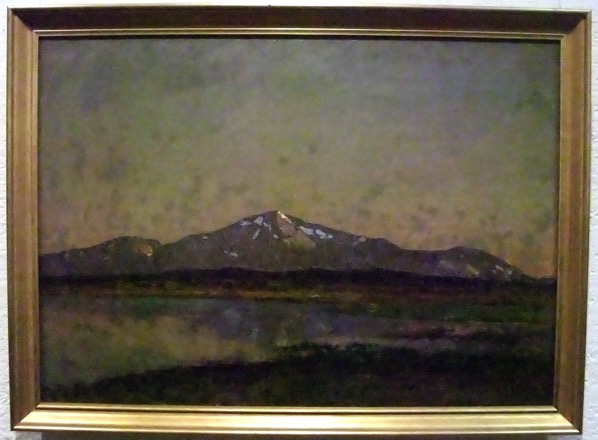
Mountain Peak

Pat’s favourite was The Mountain Peak Areskutan (a mountain in central Sweden) by Per Ekstrom 1844-1935 because of the way it showed the light we have seen on many occasions when in the north of Scandinavia

Leon Augustin Lhermitte Haymaking

Others we liked included Haymaking by the French artist  eon Augustin Lhermitte 1844-1925

Peculiar

Not all of the art was to our taste - we found this “The Child” by Fredrik Radium 2005 very peculiar.

In most of the galleries, the art work was very well displayed

Still Life Arrangement

such as this arrangement of Still Life pictures. Why there were so few visitors there we do not know but having much of the Gallery to ourselves was a delight.

On our way back to our hotel pick up our bags, we passed the

Fish Church

Feskekörkan (known as The Fish Church) which opened in 1874 and used to be the central fish market but now has moved slightly upmarket and is still selling fish.

Fish

It is said to get it name from the fact that the Architect (Victor Von Gegerfelt) had only ever designed churches and hence everything he designed looked like a church even if it wasn’t.

The Central Food Hall

Food Hall

Nearby is somewhere we were advised to buy lunch since the

Food Hall 0

quality of the food was very good

Food Hall 1

Food Hall 4

although not all suiting the tastes of a Vegetarian.

Food Hall 2

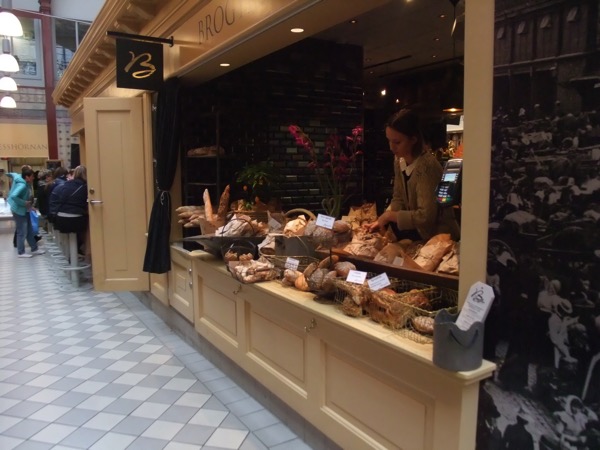
However the varieties of bread were superb

Food Hall 3 

and the cakes were said to be brilliant - they were.

Returning Home

The flight back was early arriving and we were soon home. Our conclusion about Gothenburg is that it is a very pleasant place to visit, perhaps not as attractive as Bruges or Milan or many other European cities but worth going to for a short visit, particularly if you can get the cheap fares we managed to.

Wednesday, 23 September 2015

The first 12 hours and 35 minutes

Having arrived in town, our first task is to get rid of our bag at our Hotel - the Hotel Viking. This is a somewhat unusual hotel in that it actually is an old sailing boat built in 1906. Technically it is a Four Masted Barque and although 438 were built, it is one of only eleven still in existence.

Viking from the land

When it was a working ship, amongst the cargoes it carried were: Wheat from Australia; Guano from South America; and Soya from Vladivostok. It carried its last cargo in 1948 and then became a School Ship and in 1995 it was converted into a hotel and conference centre.

Viking from the sea

For the technically minded, it is 108m long, 13.9m wide, could carry 4100 tons of cargo and had a sail area of 3690 square metres which for the less technically minded is about half the size of the Manchester United Football Pitch or to put it another way - large!

Viking Cabin

We chose this hotel because it looked different. It has 27 cabins and ours was surprisingly large and quite comfortable other than the fact that the floor sloped significantly, presumably something to do with the design of the boat.

Porthole view

Now it is permanently moored in the harbour (above is a view of the harbour through a porthole) and will never again unfurl its sails. Also it cannot sail down river with its masts up because a bridge has been built across the river and there is insufficient clearance.

The Canals of Goteborg

After lunch, a walk across town takes us past a variety of buildings - many nice and some less so.

Opera House

This is the Opera House and is said to have been designed to look like a ship since it is adjacent to the water front although

Opera House from River

I think that idea is less convincingly shown from the River. The Architect (Jan Izikowitz) described his design as "Something that makes your mind float over the squiggling landscape like the wings of a seagull” - I am not so sure about that.

Lipstick

This building known as Skanskaskrapan, is nicknamed “The Lipstick” and is the tallest building in the city (with a viewing platform at the top).

Central Gothenberg 1

The town centre is similar to most solid looking Nordic towns

Central Gothenberg 2

Central Gothenberg 3

This in the Hvitfeldtsplatsen area and is much more interesting than some of the bland modern buildings nearby.

The nicest architecture in Gothenburg was in the oldest part of the town, in fact the first suburb - an area known as Haga.

Haga 1

Fire regulations required all wooden houses (i.e. those lived in by the poor) to be built outside of the city walls.

Haga 2

Others in the area are not wood but their design is very pleasing. This one, Cafe Husaren, is a famous bakery - famous for selling the

Haga 3

largest Cinnamon Bins in Sweden.

Paddan Boat Tour

The fact that it was not raining led us to take The Paddan which is a boat tour around the city, the harbour and the river. Late September seems not to be the most popular of times for the tour in that the boat leaves

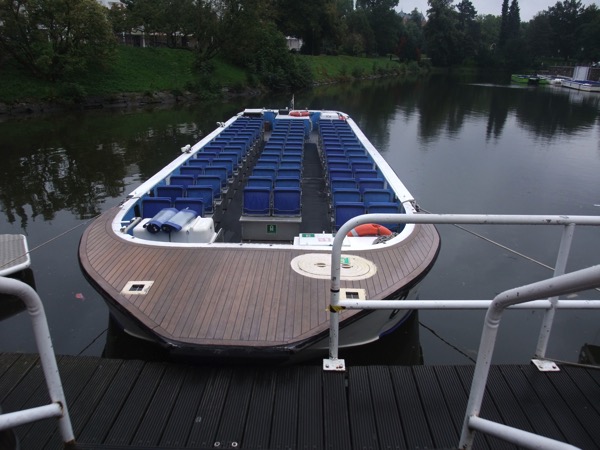
Padden Tour Boat

with 10 tourists plus two crew - a boat which can seat at least 90.

 Paddan Tour Route

The route follows canals dug to drain the land upon which the city is built and then goes out into the river. The boat is deliberately low in the water because it has to pass under a number of low

Bridge 1

Brideg 2

and one very low bridge known as The Cheese-grater (although The Scalper might have been more appropriate).

Low 1

Low 2

Low 3

Low 4

You could easily hit the underneath of the bridge as you pass through, therefore you duck!

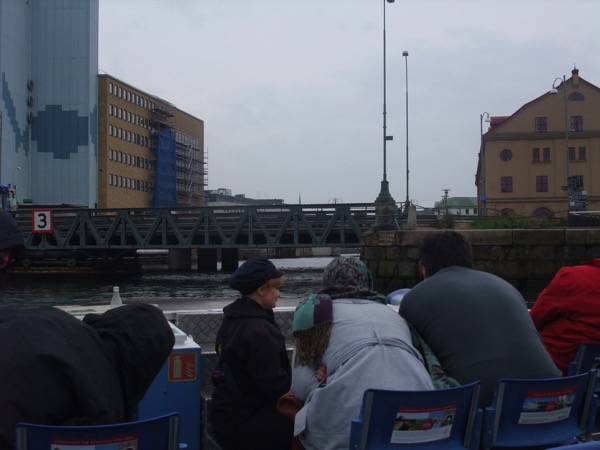
From water level one get a different view of some of the town's buildings.

Governor s House

This was the County’s Governor’s House and is on the part of the canal leading to an internal harbour area.

German Church

This is the German Church built in 1748. Many of these buildings are on the line of the original city wall and the canal was both a moat and also a method of draining the land in order to build a city.

City Wall

Only one small section of the original City Wall remains.

River View

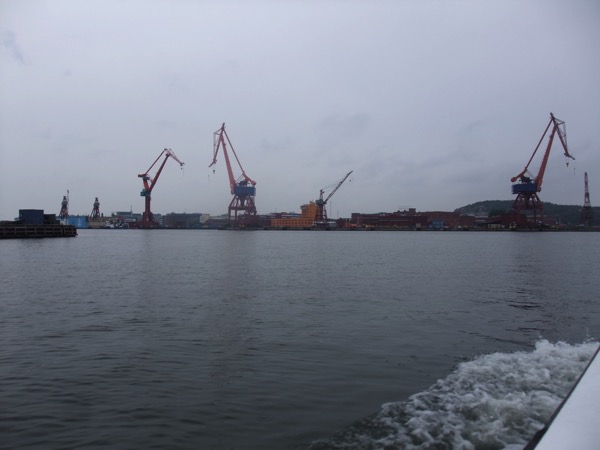
When the Paddan trip passes out into the river, we were able to understand the historical importance of the river to the town. However, the ship repair business has closed down as has much of the docks and the cranes lie idle, most soon to be demolished

Crane to remain

although this one will remain as a memory of the past.

Floating Dock

One unusual “boat?” in the river was a large floating dock which, having been sold, was undergoing renovation before being moved elsewhere in the world.

This was a good way of spending 50 minutes seeing the most important parts of the centre of Goteborg.

Monday, 21 September 2015

30 hours 10 minutes in Gothenburg

One day an email popped into the inbox from RyanAir with the message “fly to Gothenburg for only £9.99” and so we did! It is just over 1000 kms between the two airports and at these fares it is a real bargain. In total it cost £39.98 return for the two of us - how they can sell tickets at those prices I do not know because Air Passenger Duty on the outward flight is £13 each and then you have to add both sets of airport charges and all of the other ways the airline industry has dreamt up to extract money from travellers. 

Our financial objective is to have the holiday paid for from the profit we made when we were given compensation for our flight to the Isle of Mann being cancelled in August.

Gothenburg has been sitting on our wish list ever since we read an article in one of the dailies talking about how nice (and cheap for Sweden) the city was for a short break. It described how the airport was close to the city with a frequent bus service, buying a Gothenburg card gave you free or reduced entry to museums and free pubic transport, food was interesting, alcohol was too expensive to buy and lots more.

So our challenge is going to be to see what we can fit into a one night stay or 30 hours 10 minutes (which is the time between the published arrival and departure times of our flights) without exhausting ourselves. On our itinerary are:

  • a boat tour of the city
  • a visit to the National Gallery to see some Scandinavian Art
  • finding and then eating cinnamon buns
  • walking around the city to get a feel for its architecture and character

The Goteborg Tourist Pass is heavily advertised and would be a good buy but for the fact that many of the attractions included in it are closed this late into the year  so we decide to do “Pay as we go"

Our flight out departs at 0830 which is far more civilised than the too frequent 0600 option (the time our local airport opens for departures) and the return arrives back at a civilised 1830. The time difference is only one hour and hence we should be able to have an interesting time without getting too exhausted.

And so, not terribly early on a Tuesday morning we find ourselves driving to the airport (we also got a cheap deal on car parking and so decided to take the lazy option) ready to ensure that we do not incur any of the additional charges the airline and airport have ready to inflict on the unwary traveller. We do not want to pay extra for:

  • checking in at the airport
  • printing boarding cards at the airport
  • priority security screening;
  • preassigned seats;
  • seats at the front;
  • priority boarding;
  • tea or coffee on the flight (one cup each would cost more than 50% of the price of one ticket);
  • their version of essential travel insurance;
  • SMS texts of our flight times;
  • checked luggage;
  • and much more

"£39.98 for two return” is what we paid and that is what we intend to keep to!

Screen Shot 2015 08 18 at 16 07 25

With the usual Ryan Air efficiency, we take off on time and arrive early. The bus into town (with free wifi) is just outside of the airport terminal and soon we are in Gothenburg only one hour into our 30 hours and 10 minutes on Swedish soil.

Wednesday, 26 August 2015

A visit to Calke Abbey

We were heading up north one day and arranged for the route to take us past Calke Abbey which is a place I have always wanted to visit ever since it was announced that it had been given to the National Trust.

  • its history is covered here;
  • its paintings here;
  • pictures of the superb bed and more history here and here; and
  • some better photographs than mine here;
  • a very good National Trust blog with a lot of information about what the NT have done here.
Many of the owners of the house seem to have been very eccentric. Sir Vance Crewe who inherited the house in 1886, filled it with his collections (lots of stuffed animals / birds etc). He took to communicating with his servants by letter and hid in the woods when is wife entertained. He would not allow motor vehicles onto the estate and hence there are a lot of carriages on display. Electricity first arrived in 1962 !

Calke Abbey

This is the House (I know it is called Calke Abbey but you have to read the history to find out why) from the front. The first thing that struck us about this facade is that there seems to be no grand entrance.

The Greek Portico was built onto the front of the house in the early 1800s, about one hundred years after the house was built. At roughly the same time, the set of grand stone steps which took visitors up to the entrance salon on the First Floor  were removed and replaced with a rather horrid flight of metal steps on each side of the portico - later these were removed. So currently the only entrance on the front is through a nondescript door in the centre of the ground floor which leads into a small lobby.

Calke from the side

The size of the house can be seen from this view.

The National Trust say that what the visitor sees when they go round is exactly as they found it when they took the house over. We were told that they took thousands of pictures of everything in situ before clearing rooms out in order to stabilise them. By this, they mean that they tried to stop the house deteriorating any further and have not renovated anything. Once the structure had been stabilised, everything was put back exactly where it came from.

LIving Room Calke Borthers

To the left of the ground floor entrance is one of the few rooms lived in by the last owners of the house. Apparently they had a deal with the local butcher that whenever an animal from the estate went to the slaughterhouse, the head was returned for stuffing.

Cartoon Room

Around the corner is a room known as The Cartoon Room - why is obvious. These seem to be original political cartoons pasted onto the walls.

In the stair windows (going up to the first floor) are a pair of pigs placed exactly where they were found

Pig 1

Pig 2

Kitchen

then on the first floor is the remains of a kitchen used by the last owners
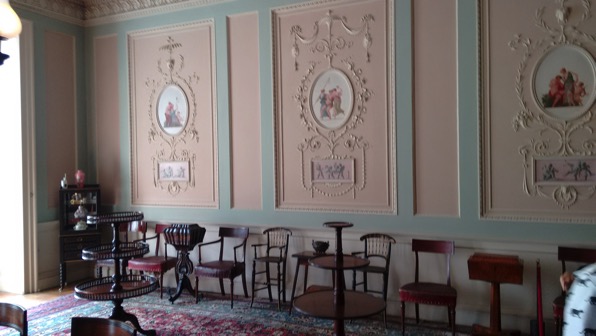
Chair room

and next to that a room with the largest variety of chairs you will find anywhere.

Salon

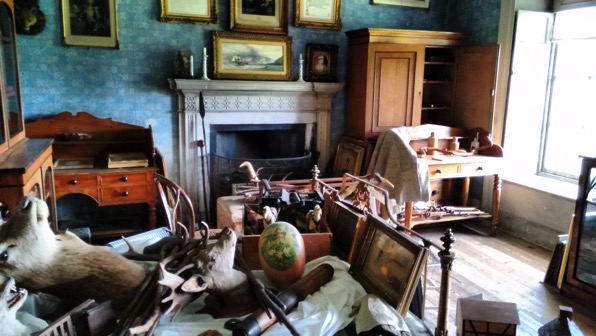
The original entrance room (double height), now the salon contains numerous stuffed animal cases and a billiard table, paintings and a lot more.

Room full of collectables

By now you should have some idea of how much stuff has just been dumped in rooms. Apparently when one room got too full, they just put the next items collected in the next empty room.

Library Shelf

Books on a library shelf are in the order they were placed - i.e. no order.
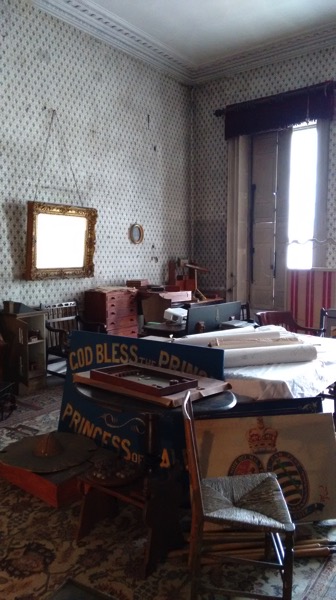
Stabilised Decay 1Stabilised Decay 2

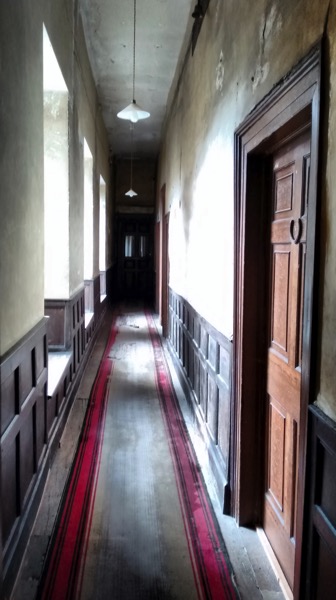
Stabilised decay is obvious once you get into the further reaches of the house.

Collections of “things” continue to fill rooms.
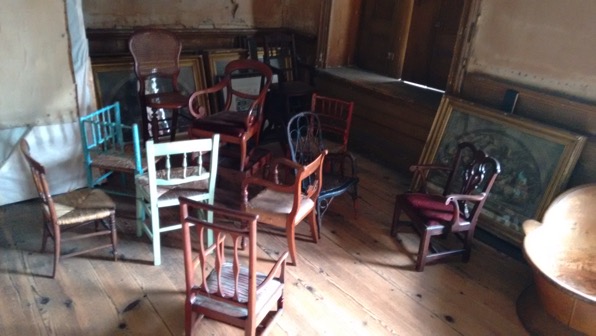
Room 1 

Room 2

Room 3

Portable Shower

Above is a portable shower (the six cane poles are removable thus making it portable). Hot water is put into the tank on the top, you shower and your servant uses the hand pump on the front to pump the water back up to the top tank so either you can continue to shower or the next person can shower in your dirty water.

State Bed

The most remarkable and perfect item in the house is “The State Bed” which probably came to Calke Abbey in 1734 with the marriage of Lady Caroline Manners to Sir Henry Harper but was found to be too large to be assembled. So it was put back in its crates and left in the basement to be rediscovered by the National Trust nearly 300 years later. It is now assembled in what used to be a Maid’s Bedroom and is as good as new.

There is a lot more to see in the house but this should have given you a taste of the inside.

We thought that the grounds were just as good as the house in that they were very interesting and a mixture of maintained / restored and unrestored.

Church

All country estates usually have their own church and this one is no different.

Church Inside

It is still in use and the inside contains a number of monuments to the owners of the house with flowery text extolling their virtues and proclaiming how much they were loved by the locals! 

An example is:

IN LOVING MEMORY OF SIR JOHN HARPER CREWE 9TH BARONET WHO WAS BORN AT CALKE ABBEY NOV 19TH 1824 MARRIED NOV 20TH 1845 GEORGIANA JANE 2ND DAUGHTER OF THE LATE VICE ADMIRAL W.STANHOPE LOVELL R.N.K.H AND BY HER WHO SURVIVES HIM LEAVES TWO SONS AND A DAUGHTER AFTER AN ILLNESS BORN WITH SINGULAR SUBMISSION AND FORTITUDE DEPARTED THIS LIFE MARCH 1ST 1886 IN THE 63RD YEAR OF THIS LIFE DESERVEDLY HONOURED AND ESTEEMED IN THE NEIGHBOURHOOD BY HIS TENANTS AND DEEPLY RESPECTED BY HIS FAMILY AND FRIENDS. SIR JOHN WAS A STEADY FRIEND AND CONSIDERATE AS A LANDLORD AND GENEROUS AND SYMPATHISING TOWARDS THE POOR…

and so it continues in the same vein for a lot longer.

Garden 1

The Kitchen Garden has been restored to some extent
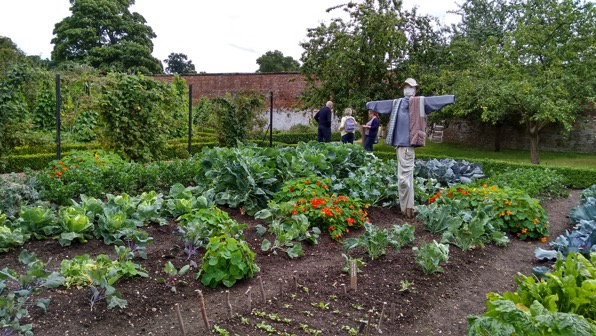
Garden 5

with the stated intention of not only growing the vegetables which were originally grown there to feed the house but also to let children, many of whom may not have seen growing vegetables, see them growing and pick and taste them when they are ready. 

Garden 4 Cardoon

This plant is a Cardoon which is a vegetable plant of the artichoke family and was first mentioned in 400BC by Greek writer Theophrastus 

Garden 3

and is beloved of bees.

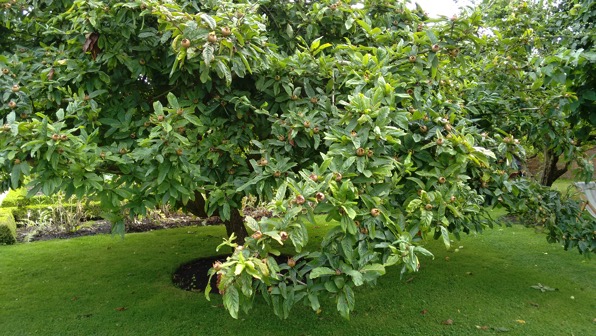
Apples

There were Medlar trees (as above) and Quince in the original 1700 garden and they have been planted here again as part of the recreation of the original garden.

Flower Display

This may look like a display of potted plants but is in fact a rare example of an Auricle Theatre which if you have not heard of before, then click on the link (the explanation is quite a way down the link article).
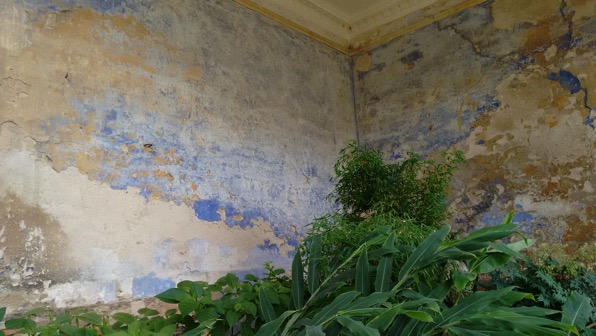
Managed Decay in Glasshouse

The original glasshouse is still standing and inside shows the managed decay which the National Trust is trying to maintain.

There is also a flower garden

Entry to Garden

which is beautifully maintained

Calke Garden

and seats have been positioned for you to sit and enjoy the garden.

Garden Shed

The Gardeners Shed looks like they have just nipped out fir a moment and smells just like garden sheds did in my childhood. It also contains all of the essential items which other people might have thrown away but a careful gardener keeps just in case the come in handy one day!

 Garden Tunnel

The owners of the house wanted to be able to walk their grounds without their day being spoilt by seeing their servants. So they had an 85 metre tunnel constructed under one of the estate walks to enable the Gardeners to leave

Garden Tunnel 001

without being seen.

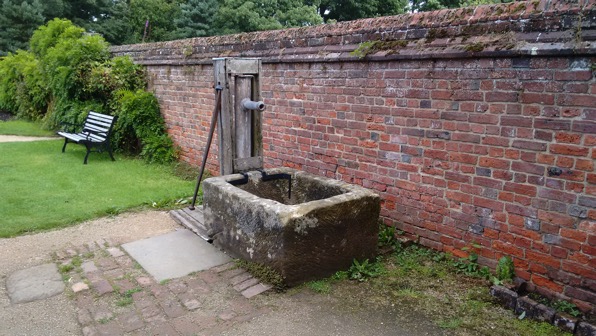
Garden Pump

And continuing my occasional theme of National Trust Garden Pumps - here is number 3 in the series.

Puppet Theatre

One thing which particularly stuck us about the House and the Gardens was the focus upon children and childhood. Amongst the things in “The Garden of the Imagination” was the above puppet theatre
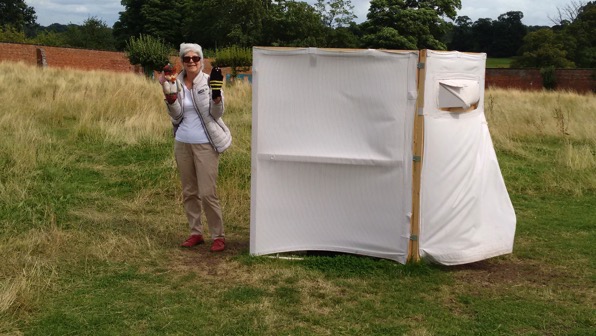
Puppet Mistress

complete with hand puppets for children (and adults) to choose from and logs in front for the audience to sit on. In the

Toy Playing

stable block a number of the stalls had been equipped with all sorts of things for imaginative play including “Dressing Up Clothes”; Tea Party equipment; and much more. To my mind, this was the type of play common when I was a child. Worksheets were readily available covering all of the house for children to use on a sort of “Treasure Hunt” as well as a number of the items in “50 Things to do before you are 11 ¾”.
I thought Calke Abbey was well worth a visit particularly if you have an inquiring mind because the staff there are very keen to answer questions, no matter how obscure.