Tuesday, 4 August 2015

Castletown, Castle Rushen, The House of Keys and back home

Of all of the places we visited in the Isle of Man, we thought that Castletown was the nicest. We passed through it on the day we arrived when we were on our way to St Marys and we went back there the following day.

Town 1

The town is a port, it is well kept and clean and tidy. What developments we saw in the centre have been in keeping with the original town design.

Castletown Harbour

The harbour did not seem to be a fishing port (as at Peel) but was quiet and neat.

Castletown Back Alley

It does not take much imagination to remove the tarmac on the streets, replace them with cobbles and turn this scene back a few centuries.

Castle Rushen

Castle from Town

Unmissable within the town is Castle Rushen which is said to be amongst the best examples of medieval castles in the British Isles. Construction probably started around the late 1100s and its history since then is fairly well documented.

Portcullis and Drawbridge

Entrance is along the usual zigzagged passageway until you

Moat

come to the internal moat, where the drawbridge used to be and the portcullis.

they have taken great care to lay the inside out as if it were still (in part) a working castle

Privy

and above we have a privy (occupied). 

Clambering

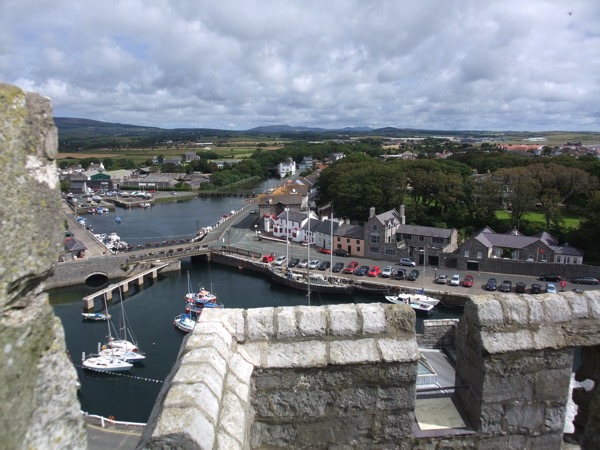
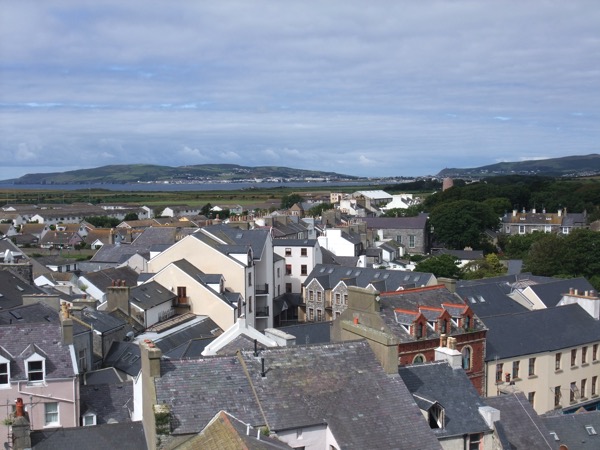
 We climbed to the very top of the battlements and got a good view over the town
Town from the Ramparts 001

Town from the ramparts

and could see a small red car parked on the quayside. 

Throne Room

Above is how the throne room might have looked

Banqueting Hall

 and this is the Banqueting Hall

Kitchen

and some distance away is the Kitchen (a distance to try to keep the danger of fire away from the main structure of the castle).

For a building nearly 1000 years old, it is in remarkable condition and gives a good understanding of how a castle worked.

The House of Keys

With a few hours to occupy on our last day, we went back to Castletown and stopped to look at

House of Keys 

the original House of Keys which is open to the public for a few hours at various times during the week.

Debating Chamber

Inside the debating chamber is laid out with agenda as if it were awaiting the “Members of the House of Keys” to come and debate.

Agenda

For the benefit of visitors such as ourselves, the agenda consisted of various motions of significance in the history of the island.

We were invited to sit at the table and vote on various motions which included:

  • "To stop James Brown, editor of the Isle of Man Times from making demands for public elections in his newspaper and insulting the Keys” - as a result of this motion in 1864, public elections came about in 1866
  • ‘this house shall move from its present building to a new location in Douglas” - this happened by 1874
  • “to extend voting rights to every make person of full age” is to be amended to remove the world “male” - women were given the vote in 1880.

The significance of each motion was explained to us and a

Animatronic

realistic “animatronic chairman” at the top of the chamber commented on our voted decision. Participation in a “debate” was very unexpected and we can highly recommend a visit to "The House of Keys”.

St Mary’s Chapel /  Old Grammar School

 Grammar School

A few yards away is the Grammar School which was originally a chapel and dates from

School sign

the 13th Century and is the oldest roofed structure on the island.

It was extended and some stage

Plan of chapel school

and became a school for boys in 1702.

Inside it is laid out as a Victorian School (the picture below looks into the blue early 18th c alcove shown in the plan above)

Inside Grammar School

and it is said that these marks in the sandstone

Nib Sharpening

were made by the boys sharpening their pen nibs on the sandstone arch.

Back Home

Our flight back was easy and on time.

We can recommend the Isle of Man without reservation (except for Douglas promenade although the Manx Museum there is superb and is really child focused). We found it to be a lovely island with lots to do and very little hassle. The people who live there were exceptionally friendly - we judge this by the number of times we were said “hello” to as we walked about.

One question we never found the answer to was why the Isle of Mann symbol is three armoured legs with golden spurs upon a red background. This is seen most often on the official flag which dates from 1932. Whilst the three legs are related to the Manx Coat of arms (from the 13th Century), the leg symbol was also used by the Mycenaeans and the Lycians which date around 1600BC.

We did learn that Emmeline Pankhurst’s mother was born on the Isle of Mann and had she stayed there, then Emmeline would have gained the vote far earlier than she did on the mainland.

We also learnt that there is no difference between "The Isle of Man" and “The Isle of Mann”.

Feel free dear reader to tell us different.


Monday, 3 August 2015

Douglas and The Gaiety Theatre

Douglas - not very nice

Douglas was our least favourite place on the island. To us,

Douglas Bay

the promenade area of the town was tired and grubby

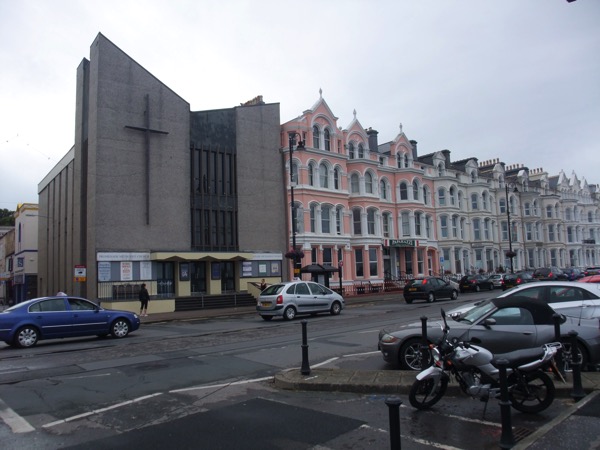
Douglas Horrid

and had one of the best (i.e. worst) examples of a 20th century building being imposed tactlessly in a parade of 19th century buildings. Also the main shopping street immediately behind it offered few charms.

Douglas MSS

Towards the southern end of the parade is a

Douglas Jubilee Clock

rather nice late Victorian Clock and just to the right of it is a modern copy of an old building of the same shape

Victoria Street

as seen in this photograph - at least here they tried to build something not totally out of keeping with its environment.

Viewed from further away, Douglas does look quite nice. High up on the southern side of the town there is a “camera obscura” which provides views of the town. It was closed 

Douglas Bay

when we went there but from afar, the view of the bay and the harbour is very nice 

Douglas Steam Packet Arriving

and one can see ferries arriving (here from Heysham).

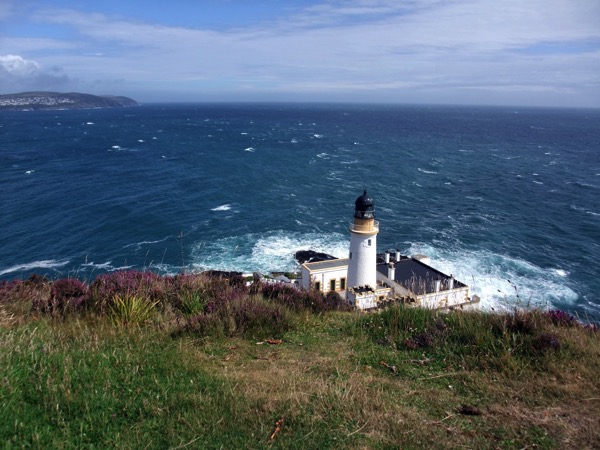
Douglas Bay Lighthouse

There is also a good view of the port lighthouse.

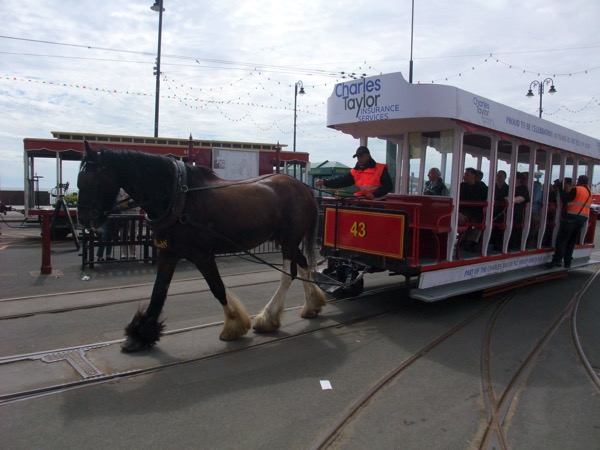
Horse Tram

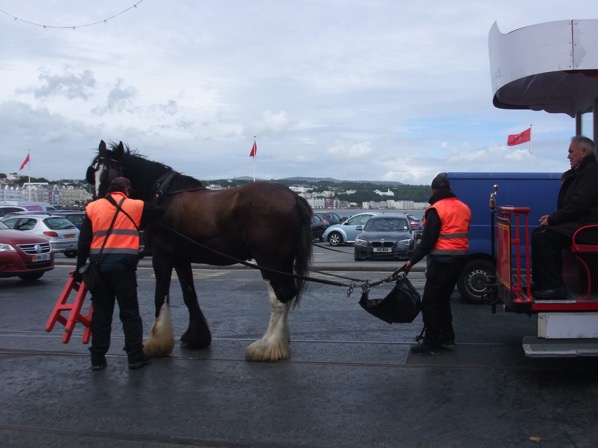
Douglas is also famous for its Horse Tram Service which runs the whole length of the Promenade.

Horse Tram 0

For the sum of £3 single or £5.70 for a 24 hour ticket (2015 prices)

Horse Tram 1

you get to be pulled along the promenade at a sedate pace

Horse Tram 3

by a very large horse. The horse comes with a (somewhat ineffective) manure collector 

Horse Tram 2

and the promenade has one of the most unusual road signs I have ever seen.

When the horses are retired, they have their own rest home which is one of the popular tourist attractions on the island.

The Gaiety Theatre - Superb

On many Saturday mornings during the year, the Gaiety

Gaiety Poster

Theatre offers comprehensive behind the scenes tours and having been on one, we can say that it is a must for anyone interested in the theatre.

Gaiety Theatre IOM

The Gaiety (some history here and here) is one of the few

Frank Matcham

working examples of a Frank Matcham Theatre and dates from around 1900.

It is impossible to include all of the photographs we took but some of the best include:

Act Drop

This is a partial view of one of the only surviving Victorian Act Drops in the world (said to be valued at £7 million) and comes down in one piece from the tower above the stage.

Auditorium Dome

The Auditorium has a lovely dome above it which originally was lit with gas flames from above to give an impression of the sun.

Gaiety Auditorium

The view of the Auditorium from the stage is one which the a member of the audience rarely sees. This theatre was built inside the shell of an existing building and the shell structure can just be seem above The Gods in this photograph.

What it would have looked like

And this (a recreation picture taken recently) is what it would have looked like when full.

Beneath the stage is a fairly full set of working Victorian Stage

Corsican Trap 1

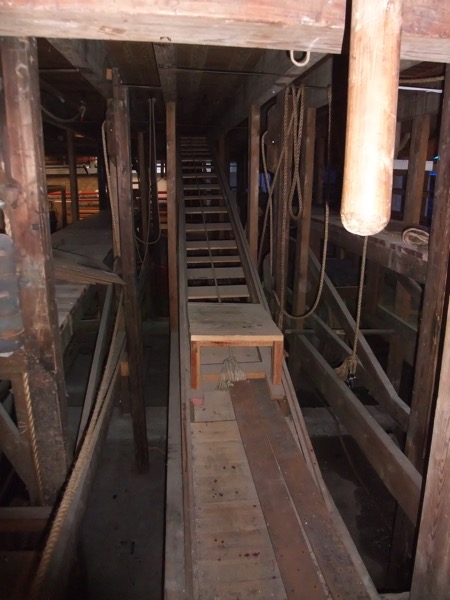
equipment including perhaps the only Corsican Trap. An actor stood on the platform and as it rose (going up the ramp in the picture), the actor gradually appeared on stage but travelled sideways across the stage as he did.

If that is difficult to understand, the video above (on YouTube) is the best I could find to demonstrate it.

There are also a number of other traps on the stage which work by the actor standing on a platform and being physically lifted up onto the stage (although there is a weight counterbalance to make it easy).

Refurbishment of the theatre is an ongoing process and work still to be done is evident in The Gods at the very top of the theatre.

Needing repair

Here also are the remnants of when the theatre was used as a Cinema

Old Cinema Equipment

Memorabilia

and other memorabilia

Costume 1

Costume 2

including some costumes. 

This tour really was a very good way to get to understand how a Victorian Theatre worked.


Saturday, 1 August 2015

Landscapes, Snaefell, Trams, the Laxey Wheel

Where we are staying in the north of the island is close to a beach and the sea and in the evening, not matter what the weather, we went for a walk on the beach - a beach which we always had to ourselves.

View north

View south

There is something particularly magic about having beach to yourself.

Naibyl Point

South from here (on a sunnier day) we went to Naibyl point

Fog Horn and Lighthouse

and to the far north is Ayre Point which is a large shingle beach

Moved Lighthouse

with a Fog Horn and a couple of Lighthouses (one of which was moved further out on the beach as the shingle banks grew)

Message in stones

and it was also a place where people seem to leave messages made from stones.

Electric Trams and Trains and Snaefell

Railway Poster

One of the most famous views is that from the top of the only mountain on the island, Snaefell, where on a clear day you are said to be able to see seven kingdoms - the Kingdoms of Mann, Ireland, Wales, Scotland, England, the Sea and Heaven. So of course we went up the mountain on the

Laxey Booking Office

Snaefell Electric Railway which you catch at Laxey (on the coast).

Snaefell Tram

The island’s  team trains, electric trams and horse drawn

Electric Tram at Ramsey

trams are very famous and a pleasure to ride on.

Laxey Water Wheel

Immediately upon leaving Laxey (waterwheel on the right), the Snaefell Electric Railway

Climb and brake rail

starts the climb to the top.The middle brake rail is clearly seen in this photograph - on the way down a set of calliper brakes grasp the brake rail to ensure the tram does not run out of control.

Snaefell Landscape

The scenery is beautiful

Snaefll Cloud coming in

but as you get closer to the top, there is a big risk of cloud

Snaefell Cloud Rolling in

rolling in and covering the summit and many of the kingdoms becoming invisible!

Snaefell Summit Hotel in Clouds

So when we get to the hotel near the top, we find we are in the clouds and of course everything is hidden.

Snaefell Trig Point

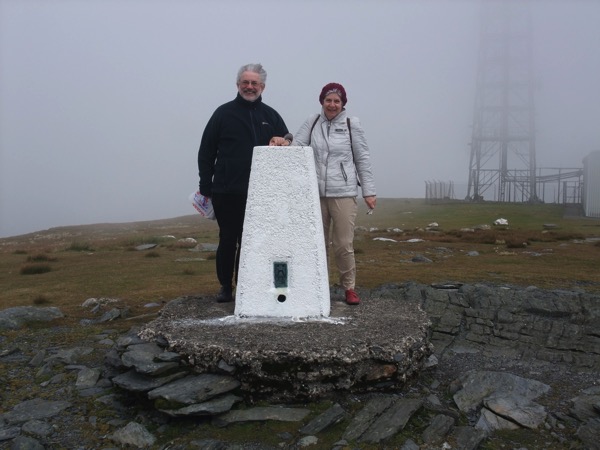
But in the face of a howling gale, we press onwards up the path to the trig point at the very top for a photograph

In the face of a gale

which is very very strong!

There are numerous websites describing the trams and trains and a starting point is here.

It is common for Tram spotters to follow the trams in their cars in order to take pictures of a particular tram at as many vantage points as they can. One day we found out that we

Tram 1

were riding "Tram 1” which apparently is the oldest of the trams still in use and dates from 1893 (history here)

Tram Spotter

and a spotter was seen on a number of occasions following us to get another photograph of Tram 1

Tram 33

and its carriage Tram 33.

As befits the island which was said to be where Thomas the Tank Engine and his friends lived, the stations are quaint

Isle of Man Station

and they are not there just for tourists, they are used by residents as well although they do not pay the same high prices charged to tourists.

The Laxey Wheel

Laxey sign

The Laxey Wheel is a superb example of Victorian

Laxey Wheel 1

Laxey Wheel 3

engineering and is the largest victorian waterwheel (72ft 6 inches diameter) still in working order. Visitors are allowed to climb to the top of the wheel up the spiral staircase on the right of this picture.

Laxey Wheel 2

It was built to pump water out from an ore mine and as the wheel turns, it moves this long connecting rod which is connected to a pump some distance away in the hillside.

Inside mine

You can still walk a little way into the mine and get a feel for what it might have been like for the miners.