Sunday, 10 September 2017

Moving on to Zanzibar

After 3 full days at the camp it was time to move on to the Breezes Hotel and Spa in Zanzibar.

DSCN2547

Check-in formalities at the airstrip were of course non existent and so we relaxed in the air conditioned lounge until our plane flew over the strip ensuring there were no obstructions on the runway ! 

Arriving plane

When it landed, we were told that after we had picked up some passengers at another nearby airstrip, we were going to fly direct to Zanzibar rather than having to change planes in Dar Es Salaam. 
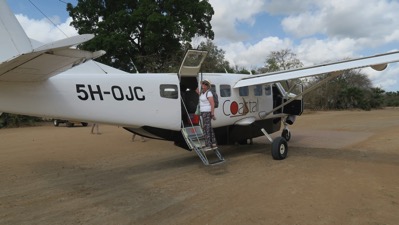
Pat climbs aboard

This time the 12 seater plane was full, so full that the 13th passenger had to sit in the co-pilot’s seat.
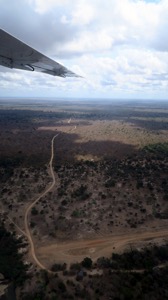
Airfield

This view shortly after takeoff shows the “airport terminal” (bottom middle) and the track we followed going into the game reserve.

Wildebeast

Hippos and Water Buffalo were out in force on the banks of the Rufiji River as we flew away 

River from Air

and the irrigation provided by the river is evident from this photograph which shows a lot of greenery along its banks. 

Zanzibar

A detailed history of Zanzibar is given here. It became a Protectorate of Britain in 1890 and in 1896, British disapproval of the local Sultan led to what has been called the shortest ever war (38 minutes). More overt direct rule from Britain started in 1913. The Protectorate ended in 1963 with full self government within the Commonwealth and after a local revolution, the People’s Republic of Zanzibar and Pemba merged with mainland Tanganyika to become Tanzania some four months later.

Zanzibar Airport

To go through Zanzibar Airport is to go back in time. We parked in front of the terminal and walked over to it. Immigration was straightforward and our bags were waiting on a trolley in customs. There is no conveyer belt system here for baggage, everything is done by hand.

Our taxi which was waiting outside, took us straight to Breezes which is situated on the east coast directly looking out onto the Indian Ocean.
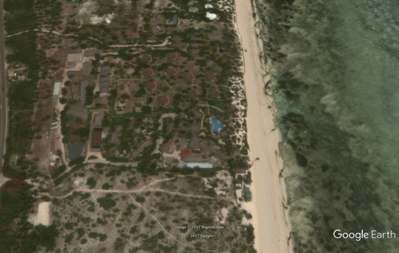
NewImage

The general arrangement is of a number of two storey villas in large grounds with a swimming pool and adjacent dive centre overlooking the beach and the Indian Ocean.
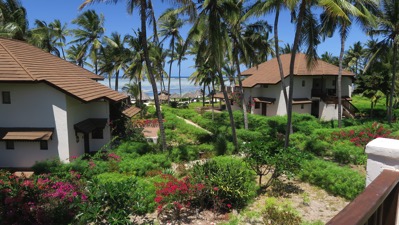
Balcony view

This was the view awaiting us from the balcony of our rather superb suite of rooms. 

Grounds

There is no central block of rooms as in many hotels. Here all guests stay in a small house which provides for four apartments. 
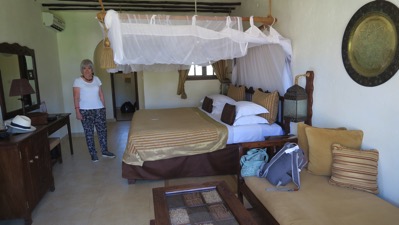
Bedroom

The bed was about 8 feet across with a large mosquito net which was let down overnight by the staff.

Beeeater

Adjacent to our balcony was a tall coconut tree complete with coconuts. Not particularly interesting but the colourful Bee Eater sitting on one of the coconuts was. 

Lady in the grounds

The resort grounds were very well maintained.

Pool at daytime

This is the large swimming pool which was also used for Padi Open Water training for those who took their qualification whilst staying at the hotel. 

Pool at night

It took on a different appearance at night although usage of the pool stopped at 7 pm. 

Dining Room

All meals were served in a large dining area, waiter service one day and buffet service the next.
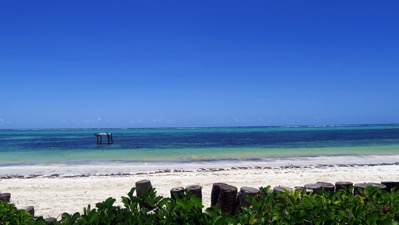
Lagoon

In front of the hotel is the beach and beyond that a coral reef and a lagoon. The sky was invariably blue and lying on a sun lounger, shaded by a large umbrella, listening to the sound of the sea and being kept cool by a southerly breeze was more than relaxing. 
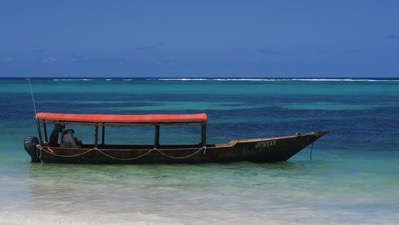
Diveboat

I did four dives over two days and this is the dive boat I used. It took me outside of the lagoon into deeper water for each dive. The fish were nothing spectacular nor was the coral but diving again was very nice, it having been a few years since I last dived.

We both felt that Breezes was perhaps the best hotel we have ever been to because it provided unobtrusive service and luxury. Its reviews on TripAdvisor are almost universally excellent and we found the few complaints mentioned in the reviews (such as "at low tide the sea was too far away”) rather amusing or inaccurate.

This type of luxury experience is not something we are used to because we usually take far more active and challenging holidays but we are agreed that as we get older, it will become more the norm for us.

Friday, 8 September 2017

The local villages and a River Safari

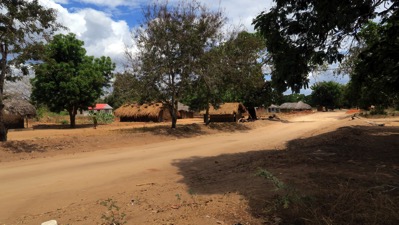
The Selous Riverside Camp is about 30 minutes drive outside of the Game Reserve and whenever we went to the airstrip of the Game Reserve, we had to drive through one of the local villages - Mloka.  

Road Hazard

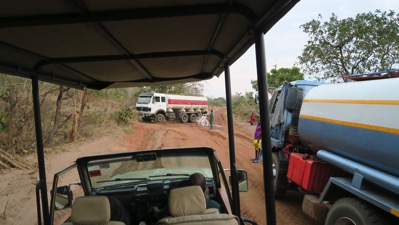
The road was a dirt road which had recently been rolled to make driving it easier. There is little vehicle traffic and what there is can present their own challenges such as 12 foot pieces of timber being carried sideways on a motor bike

Traffic Jam

or two water tankers taking over the whole road.

Shop Mobile Phones

This mobile phone “shop” is typical of the design and construction of the house we saw. 

Shop for tourists

This one (selling paintings to tourists) is slightly more advanced in that it has some concrete around the veranda.

Village Houses

We were told that when you want to build a house, you just choose some land and get on with building it.  

Typical House

Your neighbours will help with the basic structure but it is then uo to you to build the walls, usually mud over a framework of sticks. 

Village House 

Although there are power cables running into the village, there is no electricity. The cables were erected two years ago but were never connected up at either end. Water is pumped up by hand from the relatively high water table and communal gatherings at water pumps were a common site. We came to the conclusion that the process and demands of living was almost a full-time occupation.

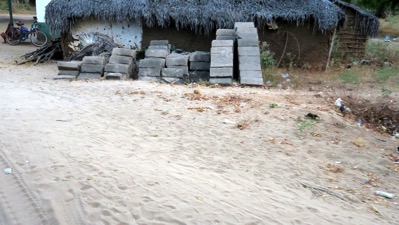
Concrete Blocks

We noticed a growing number of concrete blocks around the place 

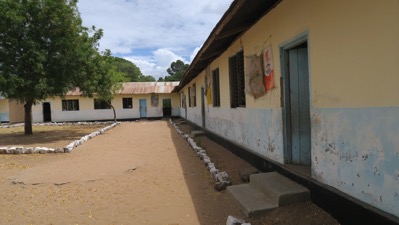
Primary School 001

 and a few houses, the local primary school

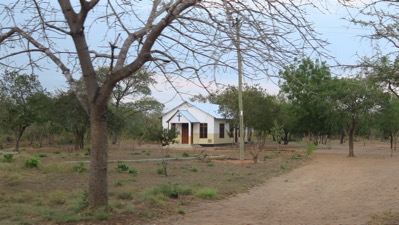
Church

and this church had more of an air of permanence about them.

Primary School

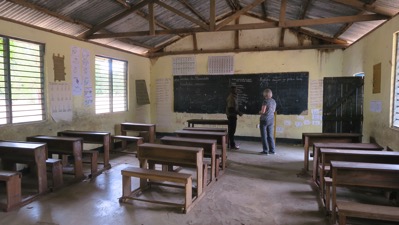
Compared to Primary Schools in England, 

Primary Classroom

this classroom which was for the first year of primary school was very bare.

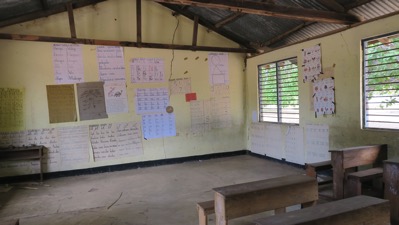
Primary Classroom 001 

We were told that some children cannot go to school because their parents cannot afford to buy an exercise book for them to write in.

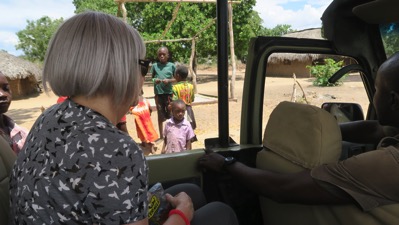
Children and Sweets

We found the process of driving around the village and looking at its buildings slightly uncomfortable. We were obviously “wealthy tourists” and whenever we stopped, lots of children would run up to us shouting “Pipi” (the Swahili word for sweets) and we were expected to given them some.

We tried to ensure that the local inhabitants were not included in our photographs (other than that above) because it is considered rude to take someone’s photograph without their permission.

A River Safari 

River from Air

The River Rufiji is home to much wildlife 

River Safari Boat

and late one afternoon we went on a safari along it. 

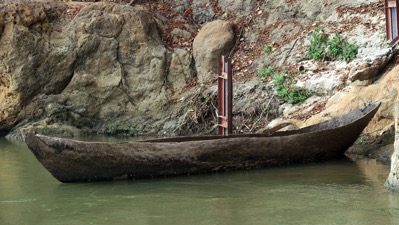
Native Boat

Wooden Canoes were very common on the river. These are made 

Native Boat 2

by hollowing out (by hand) a tree trunk and are works of rural art in themselves. Apparently it takes two men about a week to construct one. We saw a number of ferries crossing the river which were in fact canoes such as this.

King Fisher

Bird life was in profusion along the river. 

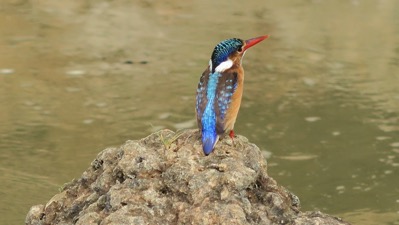
KingFisher Malachite

This Malachite Kingfisher just sat there posing for us and was not at all perturbed when we got close.

Kingfisher Pied

 And this is a Pied Kingfisher.

Lizard

Lizards are very common and also a danger to birds because they are adept at eating whatever they find in a bird nest. 

Crocodile First

This was the smallest crocodile we saw, said to be about two weeks old.

CrocodileLarge

And this monster was the largest we saw. When it saw us, it lumbered into life

CrocodileLarge 2

and waddled down the shore into the river in our general direction. Fortunately we then moved on! 

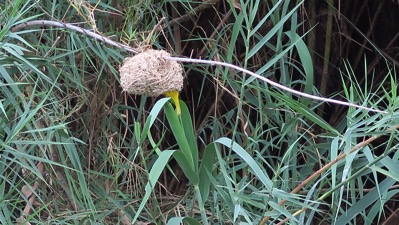
Weaver Bird Nest Site

Yellow Weaver Birds live along the river bank and, as with their cousins in the game reserve, 

Weaver Bird Yellow

use local material to make their nests. 

Weaver Bird Yellow in Nest

Again quite unperturbed at out presence. 

Weaver Bird Nest 001 

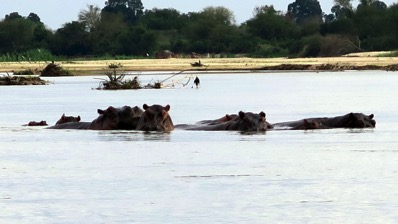
Hippos watching

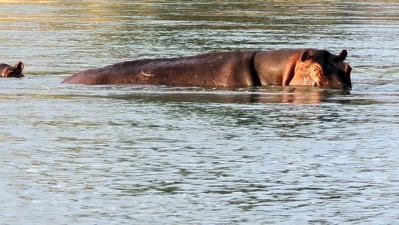
The river was full of Hippos with numerous Pods staying cool in the water.

Hippo

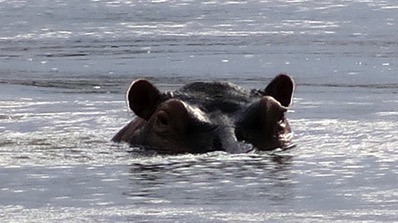
Occasionally they would rise up to show us how large they were 

Hippos 001

or spy on us to make sure we were not a threat. 

Hippo Path

I still find it hard to imagine an animal such as a 4 ton Hippo managing to climb up a steep river bank along a path such as this. 

Sunset

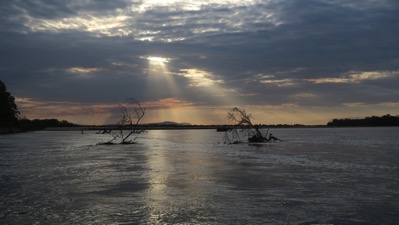
We waited in the middle of the river for the sun to set

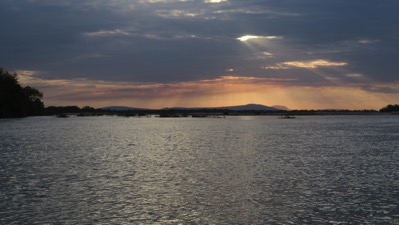
Sunset 001

and when it did, it was time to go back for dinner.